


EYFS
Nursery and Reception
Leader of EYFS - Miss Buckle
Teachers - Miss Buckle and Mrs Kenyon
Supported by- Miss Gallaghan, Miss Lee, Miss Osborne, Mrs Smeaton and Mrs Worrall
Class Email- EYFS@can.fa1.uk
Welcome to Early Years at Canon Johnson
Here at Canon Johnson we provide a high quality learning environment to enable our children to learn through play and playful experiences.
Our Early Years runs as an EYFS Unit, meaning both Nursery and Reception children learn alongside each other.
Throughout the day our children get a balanced mix of teacher and child led learning: either playing independently or with friends or being part of adult directed teaching and activities. Our staff are skilled in quality interactions and wherever possible we play alongside the children with their choice of activity and use careful questioning and talk strategies to move learning forward and challenge thinking.
Our long term plan, across both Nursery and Reception focuses on the seven areas of learning within the EYFS. We carefully look at the knowledge and skills needed to progress through the EYFS and meet the Early Leaning Goals.
Long Term Overview
For more information on child development and learning through play in Reception, please click on the following links:
Reading
What does it mean to be a reader?
A reader is someone who loves to read. Being a reader means that you understand not just words but whole sentences. It means that you can comprehend everything you are reading.
In Early Years at Canon Johnson, we aim to foster a love of reading and for all of our children to become good readers!
Children learn to read in different ways and at different ages. The first part of a child’s journey towards being a successful reader starts when they are a baby, listening to stories and rhymes. This encourages a love of language and stories and develops the child’s vocabulary and understanding of language as they start to become familiar with word meaning and what words look like.
Even though many children begin their Early Years journey without reading words, most children are able to ‘read’. They can recognise familiar signs they see daily and begin to internalise the shapes these letters make. Discussing and reading signs you see with your child will support them in the recognition of those letters later in their reading journey.
How we teach reading at Canon Johnson
In our Early Years, the children’s education in reading begins with the development of speaking and listening skills, which lay the foundations for the further teaching of phonics. The emphasis is for our children to be attuned to the sounds around them and ready to begin blending and segmenting words. These initial skills are taught through the whole class sharing of texts, followed by book talk/discussions, singing songs and nursery rhymes, sharing news and personal experiences.
As a school we use Read, Write Inc to teach phonics and writing, which is a complete literacy programme that helps all children to learn to read fluently and accurately at speed, so that they can focus on developing their skills in comprehension, vocabulary and spelling.
All children are assessed regularly by our RWI Lead Teacher (Mr Ward) and are placed in small groups with a member of staff from either Early Years or Key Stage 1. Children in each group all work together at the same level.
In Nursery, children will be introduced to the initial sounds in short sessions, when appropriate.
In Reception, all children will learn how to read the sounds in words and how those sounds can be written down.
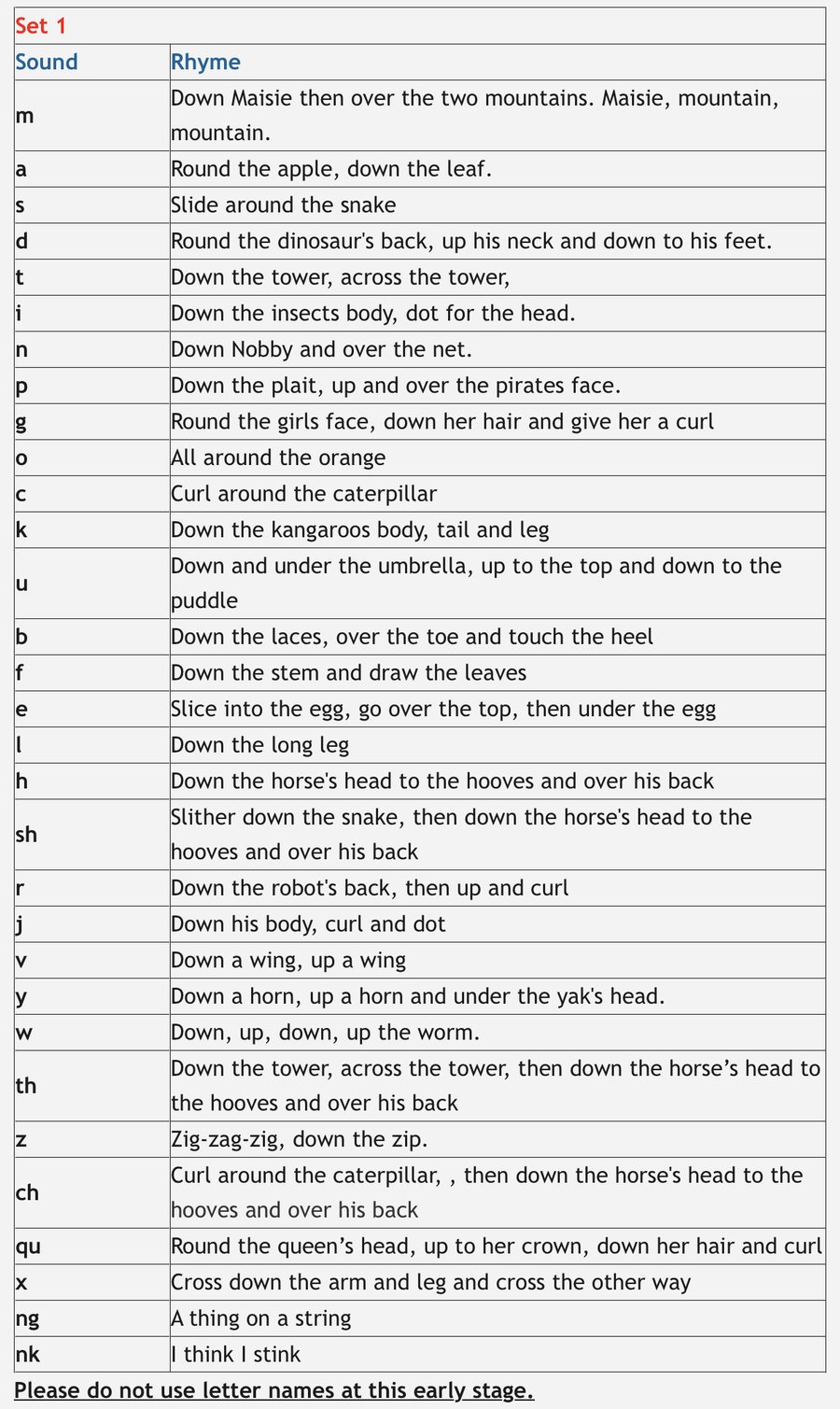
- Children will learn 44 sounds and the corresponding letters/letter groups using simple picture prompts
- Children will learn to read words using Fred talk and sound blending
- Children will read from a range of story books and non-fiction books matched to their phonic knowledge
- Children will learn to write and form the letters which represent the sounds
- Children will learn to write words by using Fred talk
- Children will learn to build sentences by practising sentences out loud before they write
Your child will start to bring home a reading book to practise, once they can confidently segment and blend the Set 1 sounds…
Click the Read Write Inc. logo below to access free Phonics eBooks you can read with your child at home…

Toileting
We understand that young children may have accidents. Please ensure that your child has spare clothes and underwear in their bags so that staff are able to change them.
If you are still struggling with getting your child to use the toilet consistently, please see this link for more information and support: SPD Toileting